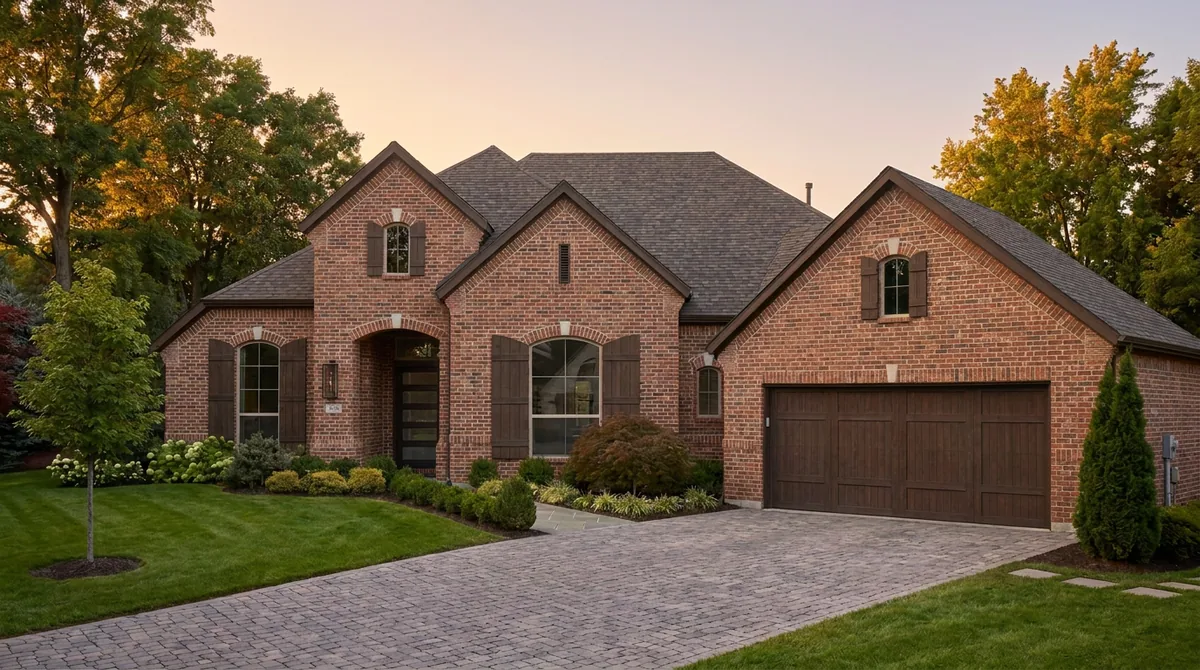
You’re pricing out a rental house or a duplex, and insurance is the one line you can’t pin down. Search “how much is landlord insurance in Texas” and you’ll find confident figures from sample profiles nobody can check. Here’s what the public data on landlord insurance cost in Texas really says, and what sets the price on your property.
If you’re still sorting out what a rental policy covers, start with our Texas landlord coverage guide.
By clicking Get My Free Quote, I give Robinson Legacy Partners LLC, an Allstate agency, and its licensed agents my prior express written consent, by electronic signature, to contact me with calls and text messages — including marketing calls and texts made using automated technology or an artificial or prerecorded voice — and by email, at the number and email I provided, about my insurance quote and related insurance products and services, even if my number is on a Do Not Call list. My information is never sold or shared with other agencies for their own marketing. Consent is not a condition of purchase; I can call (817) 262-5300 instead. Message frequency varies. Message and data rates may apply. Reply STOP to opt out, HELP for help. I agree to the Privacy Policy and Terms of Use, including the arbitration clause and E-SIGN consent.
Is there a public average for landlord insurance in Texas?
The short answer: Not a landlord-specific one, because TDI publishes a homeowners average and the NAIC publishes a dwelling fire average, so each is context for a rental’s price rather than a measure of it.
As of November 2026, we couldn’t find a Texas landlord or rental-policy average from the Texas Department of Insurance (TDI), the National Association of Insurance Commissioners (NAIC) or the Insurance Information Institute (III). Here’s what each publishes, and why none of it is your rate:
| Figure | What it measures | How to read it |
|---|---|---|
| $1,226 a year (NAIC, 2023) | Texas dwelling fire policies on what the NAIC calls “one family, owner-occupied, non-seasonal buildings” | Related lineOwner-occupied, so not a landlord average. |
| $1,019 a year (NAIC, 2023) | Dwelling fire policies across the country | ContextShows where Texas sits, nothing more. |
| $3,291 (2024) and $3,489 (2025, preliminary), TDI | Texas homeowners policies | Different productCovers a home you live in. |
Two cautions. The NAIC notes that under a dwelling fire policy, “an insured may purchase coverage for perils other than fire,” so the average blends narrow and broad policies. And the report itself calls average premium “an imperfect measure” of the price of insurance. The NAIC says its Texas data came from TDI.
Figures elsewhere online usually come from sample profiles we can’t verify, so we don’t repeat them. What moves the price on a rental:
Named perils or special
Broader forms cover more.
Rebuild cost
The biggest number on the policy.
Wind and hail
Lower premium, bigger claim-time share.
Age and condition
Affects price and roof settlement.
Liability and lost rent
More protection, more premium.
Vacancy and guests
Empty stretches change the risk.
Why doesn’t the Texas homeowners average tell you what a rental costs?
The short answer: A homeowners policy and a landlord policy cover different things for different people, so TDI’s homeowners average can’t be read as the price of insuring a house someone else lives in.
TDI’s figure is labeled for homeowners policies, and a rental policy is built differently:
- No tenant belongings. Your tenant’s things need their own renters insurance.
- Lost rent instead of living expenses. A rental policy can pay rent you lose while covered damage is repaired.
- Liability isn’t a given. The NAIC’s definitions say dwelling fire policies “may also provide liability coverage,” so check whether yours lists it.
- Occupancy is different. Turnover and empty stretches are rental risks.
Fit matters too. TDI’s guidance on renting out your home says most homeowners insurance won’t cover damage to a rental property, or it might limit what it pays. Our Texas homeowners cost breakdown covers that side.
How does the dwelling form change the price of a Texas rental policy?
The short answer: Broader forms tend to cost more because they cover more, since a named-perils form lists what it covers while a special form covers the building against anything not excluded.
The NAIC’s 2026 data call definitions describe three standard levels. DP-1 covers specific named perils, such as fire, lightning and windstorm. DP-2 adds more named perils, such as falling objects, weight of snow and vandalism. DP-3 is “all-risks” for the dwelling, with exclusions such as flood and earthquake.
Texas has its own names: TDI orders refer to its prescribed Texas Dwelling Policy forms, the TDP-1, TDP-2 and TDP-3. TDI’s Texas FAIR Plan Association overview (October 2026) says the FAIR Plan’s TDP-1 must cover fire and lightning, that other perils are optional, and that replacement cost isn’t available on it. Some policies are written on forms that differ from these standard ones, so read the wording, not the label.
Our DP-1 vs. DP-2 vs. DP-3 comparison for Texas rental owners goes form by form. For price, a narrower form can mean a cause of loss that isn’t on the list.
How do the dwelling limit and rebuild cost affect what you pay?
The short answer: The dwelling limit is the biggest number on the policy, so a higher limit generally costs more, and it should track what the rental would cost to rebuild, not what it would sell for.
It’s tempting to insure a rental for its purchase price or appraisal district value. Neither is a rebuild estimate: the land doesn’t burn, and labor and materials don’t follow the sale price. Our guide to insuring for replacement cost rather than market value shows how to set it.
TDI’s tip on replacement cost and actual cash value explains the other half: replacement cost pays based on current costs to repair or replace, while actual cash value pays less because it accounts for age and condition. Insuring at actual cash value, or for too little, may trim the premium and widen the gap after a fire.
How do wind and hail deductibles change the cost of a Texas rental policy?
The short answer: A higher deductible generally lowers the premium and raises your share of a claim, and a percentage deductible turns into real dollars based on how much the rental is insured for.
TDI’s deductibles guidance puts it plainly: “In general, the higher the deductible, the lower the cost for the policy.” Its example is a home insured for $150,000 with a 5 percent deductible, which is $7,500. TDI’s declarations page guide notes a policy may also have a separate deductible for wind and hail, so check each in dollars.
That trade matters in North Texas. The Insurance Information Institute, citing NOAA’s Storm Prediction Center, reports Texas had 902 major hail events (one inch or larger) in 2025, the most of any state. We explain the mechanics in how wind and hail deductibles work in Texas.
- A 1% deductible is $2,800 out of pocket on a covered hail claim.
- A 2% deductible is $5,600, or $2,800 more of every covered wind or hail claim.
- If covered damage also leaves the house unlivable for three months at $1,900 rent, that’s $5,700 you don’t collect unless the policy includes loss of rent.
By clicking Get My Free Quote, I give Robinson Legacy Partners LLC, an Allstate agency, and its licensed agents my prior express written consent, by electronic signature, to contact me with calls and text messages — including marketing calls and texts made using automated technology or an artificial or prerecorded voice — and by email, at the number and email I provided, about my insurance quote and related insurance products and services, even if my number is on a Do Not Call list. My information is never sold or shared with other agencies for their own marketing. Consent is not a condition of purchase; I can call (817) 262-5300 instead. Message frequency varies. Message and data rates may apply. Reply STOP to opt out, HELP for help. I agree to the Privacy Policy and Terms of Use, including the arbitration clause and E-SIGN consent.
How do roof age and condition affect landlord insurance cost?
The short answer: An older or worn roof can raise the price, shrink what a policy pays for the roof, or affect whether a company will write the rental at all, so have the roof’s age ready.
TDI’s roof replacement guidance (updated April 2026) is direct: “As roofs age, some companies will switch to actual cash value.” It also says that after an inspection, companies “may charge you more or refuse to insure you based on what they see.” On the other side, TDI says your company might give you a discount for roofing materials less likely to be damaged by wind, hail or fire.
Roof terms change the claim math too. See roof replacement cost vs. actual cash value at claim time, and if the roof is getting up there, read whether you can insure a Texas home with an older roof.
What do liability, loss of rent and vacancy terms add to the price?
The short answer: Higher liability limits and loss-of-rent coverage can raise the premium while closing real gaps, and vacancy limits can leave an empty rental exposed no matter what you paid.
Liability. The NAIC lists liability claims and legal fees among what a landlord policy can cover. An injury claim can dwarf the repair that caused it, so set the limit around what you own.
Loss of rent. The NAIC describes it as lost rental income due to damage. It doesn’t pay when a tenant stops paying. And FEMA’s FloodSmart policy terms say flood policies don’t cover financial losses from business interruption, so a flood policy won’t replace lost rent. See how loss-of-rent coverage works on a Texas rental policy.
Vacancy and use. TDI’s guidance for deployed homeowners says many homeowners policies don’t cover damage if the home is vacant for a certain amount of time, typically 60 days, and suggests asking how vacancy is defined. Dwelling policies set their own terms. TDI also says landlord insurance is mainly for long-term leases and may not suit short-term rentals.
Your tenant’s side. If your lease requires renters insurance, share our look at what renters insurance costs in Texas.
How do you get an accurate landlord insurance price in Texas?
The short answer: Gather the property details, your current declarations page and lease plans, decide which coverage you need first, then have a licensed agent price that coverage on your actual rental.
Robinson Legacy Partners is an Allstate agency at 700 Highlander Blvd, Suite 405, in south Arlington, and we help in 7 languages.
- Pull the current declarations page
Note the form, the dwelling limit, each deductible in dollars, and whether liability and loss of rent are listed.
- Write down the property details
Year built, square footage, construction, number of units, and the roof’s age and material.
- Estimate rebuild cost
Base the dwelling limit on what it would cost to rebuild, not the purchase price or the appraisal district value.
- Choose deductibles on purpose
Pick a wind and hail deductible you could pay in cash after a storm, and see it in dollars.
- Map the lease calendar
Note lease start dates, planned turnovers and any stretch the rental may sit empty.
- Talk it through with a local agent
Call (817) 262-5300 or send your ZIP, and we’ll price coverage on your actual rental.
Insuring the rental with your home and cars may lower what you pay; eligibility varies. Flood is a separate policy with a usual 30-day wait; see our flood and landlord insurance pages.
The bottom line
There’s no published Texas landlord-policy average to lean on. The NAIC’s $1,226 Texas dwelling fire figure, which covers owner-occupied homes, and TDI’s homeowners averages are context, not quotes. Your rental’s price comes from its form, limit, deductibles, roof, liability, loss of rent and how it’s used.
Send us your ZIP below or call (817) 262-5300, Monday through Friday, 8:30 to 5. We’ll read your current policy with you, put your deductibles in dollars, and quote coverage built around your rental.
By clicking Get My Free Quote, I give Robinson Legacy Partners LLC, an Allstate agency, and its licensed agents my prior express written consent, by electronic signature, to contact me with calls and text messages — including marketing calls and texts made using automated technology or an artificial or prerecorded voice — and by email, at the number and email I provided, about my insurance quote and related insurance products and services, even if my number is on a Do Not Call list. My information is never sold or shared with other agencies for their own marketing. Consent is not a condition of purchase; I can call (817) 262-5300 instead. Message frequency varies. Message and data rates may apply. Reply STOP to opt out, HELP for help. I agree to the Privacy Policy and Terms of Use, including the arbitration clause and E-SIGN consent.
Texas landlord insurance cost FAQ
How much is landlord insurance in Texas on average?
No public source publishes a Texas landlord-policy average. The closest figure is the NAIC’s: its July 2026 report (Table 4) puts the 2023 Texas dwelling fire average at $1,226 a year, compared with $1,019 across the country, for one-family, owner-occupied, non-seasonal buildings. TDI puts the average Texas homeowners premium at $3,291 for 2024 and $3,489 for 2025 (preliminary), but that’s homeowners insurance. None of these is a landlord average or a quote.
Is landlord insurance more expensive than homeowners insurance in Texas?
Public data can’t answer that cleanly. The NAIC’s 2023 Texas dwelling fire average of $1,226 sits below TDI’s 2024 homeowners average of $3,291, but they measure different policies and years. The NAIC notes that a dwelling fire policyholder may buy coverage for perils beyond fire, so its average mixes narrow and broad policies. A landlord policy also leaves out tenant belongings, and liability and loss of rent may or may not be included.
How can I lower landlord insurance costs without leaving gaps?
Start with choices that don’t cut protection. TDI says that in general, a higher deductible lowers the cost of a policy, so pick one you could pay in cash. TDI also says your company might give a discount for roofing materials less likely to be damaged by wind, hail or fire. Insuring the rental with your home and cars may lower what you pay, though eligibility varies. Avoid insuring below rebuild cost or dropping liability or loss of rent.
Does a vacant rental cost more to insure in Texas?
It depends on the policy, but the bigger issue is coverage, not price. TDI says many homeowners policies don’t cover damage if a home is vacant for a certain amount of time, typically 60 days, and dwelling policies set their own vacancy terms. Before a rental sits empty between tenants or during a renovation, ask how your policy defines vacancy and whether extended vacancy coverage is available. Tell your agent the dates ahead of time.
Why can two Texas rentals with the same rent have very different premiums?
Because rent is only one piece. Premiums follow the building and the coverage: rebuild cost and dwelling limit, the policy form, roof age and material, the wind and hail deductible, the liability limit, whether loss of rent is included, how many units there are and how the property is used. Two houses with the same rent can differ on most of those, which is why we read the declarations page and the property details before we talk about price.
Last reviewed by the Robinson Legacy Partners team on .